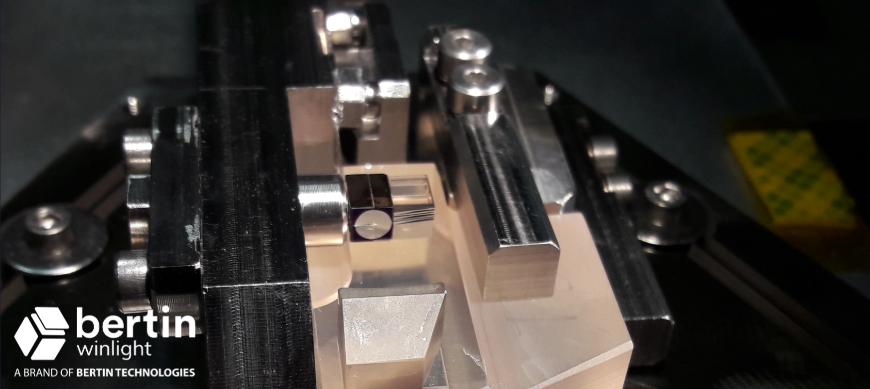
Thanks to SPIRou, the near-infrared spectropolarimeter of the Canada-France-Hawaii Telescope, an international team has just detected a potentially habitable exoplanet 11.4 light-years from Earth. Bertin Winlight directly contributed to this discovery by supplying a key optical component of the instrument: a pupil slicer.
Coincidence or destiny? The SPIRou instrument shares its name with the famous comic magazine, which paid tribute to it with this informative and entertaining illustrated feature.
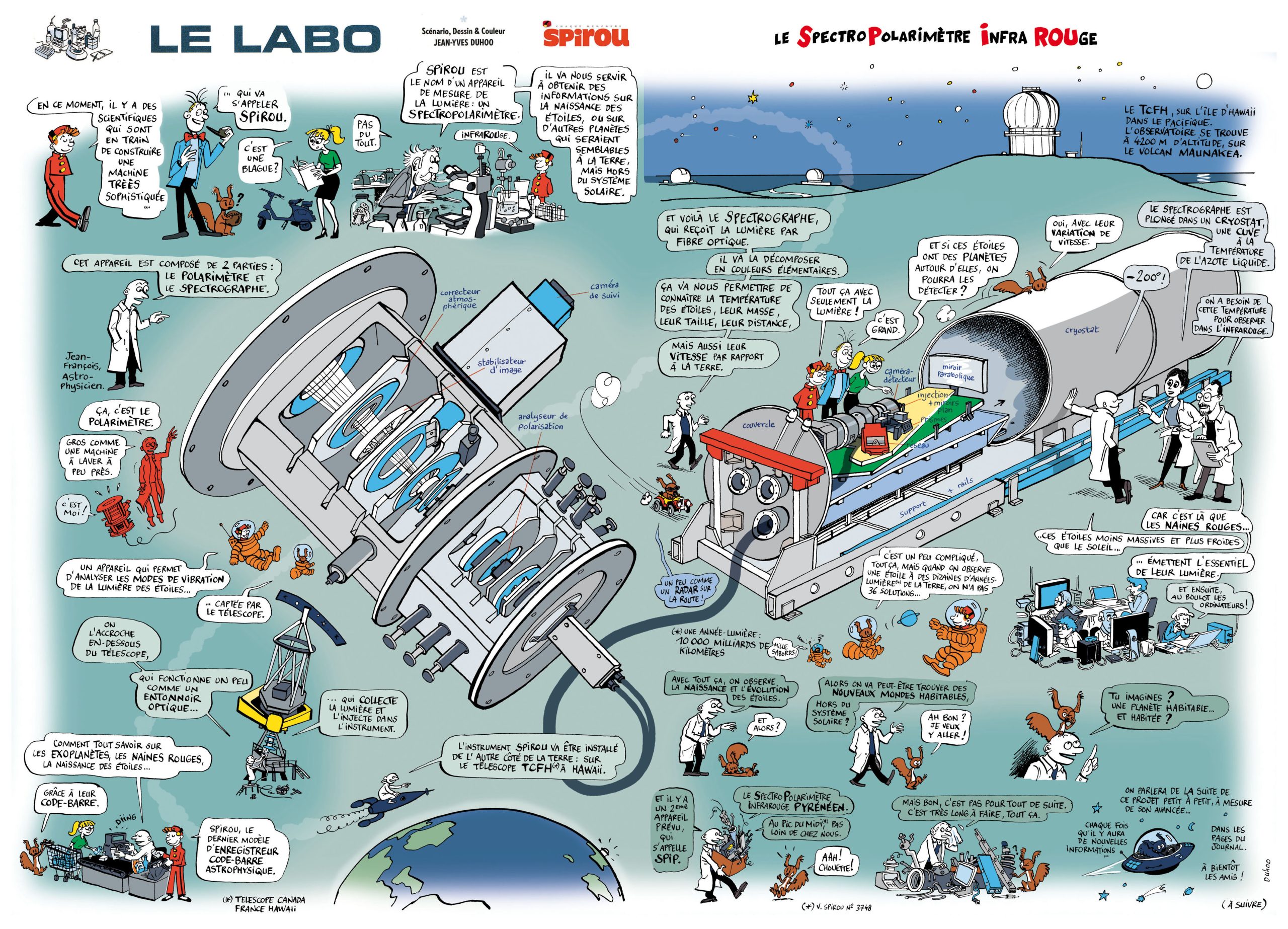
SPIRou: a landmark discovery
In operation since 2019 on Mauna Kea, SPIRou detects exoplanets around red dwarf stars by measuring their minute oscillations in the infrared. In 2026, it enabled the detection of Gl 725 Bc, a planet with at least 3.4 Earth masses located in the habitable zone of its star, just 11.4 light-years away: the second closest potentially habitable exoplanet to Earth.
Our contribution: a custom-made pupil slicer
Bertin Winlight, our division specialising in astronomical optics, designed and manufactured the pupil slicer integrated into SPIRou. This component splits the light beam into several sub-beams that are analysed spectrally on an individual basis, maximising the use of every photon captured by the telescope and directly contributing to the instrument’s extremely high measurement precision.
This achievement is based on the strong experience of Bertin Winlight as the world leader in the production of image slicers for astronomy.
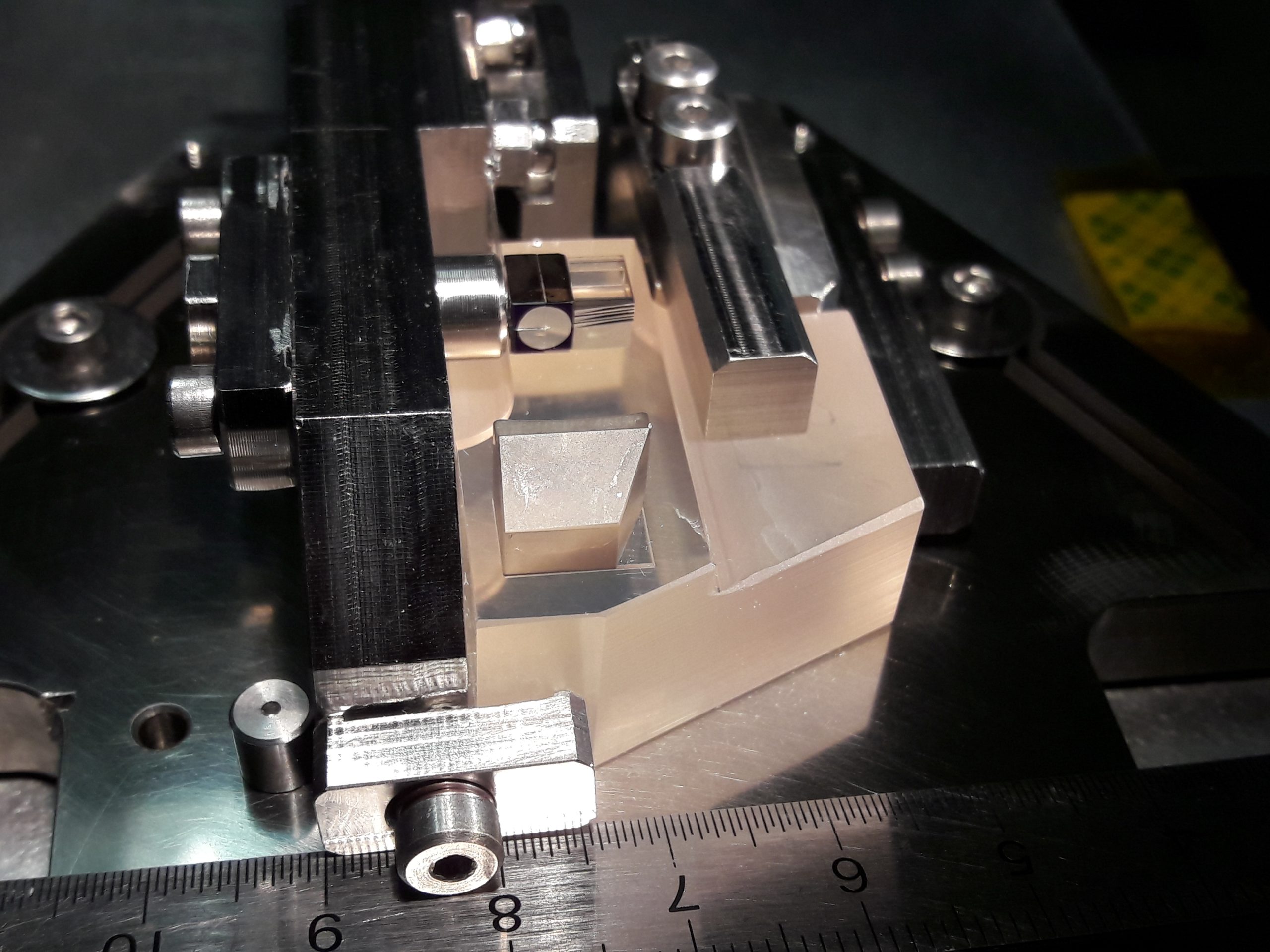
A recognised expertise across the world’s largest instruments
Beyond SPIRou, Bertin Winlight has contributed to the optical instrumentation of many leading observatories: MUSE and ESPRESSO at the VLT (ESO, Chile), KCWI at the Keck Telescope (Hawaii), the 10 spectrographs of DESI at the Mayall Telescope, and soon HARMONI for the ELT.
With over 30 years of experience in astronomy, Bertin Winlight brings its precision optics expertise to bear on the most ambitious scientific endeavours.
To know more: https://www.insu.cnrs.fr/fr/cnrsinfo/spirou-la-deuxieme-plus-proche-exoplanete-en-zone-habitable-decouverte-seulement-114