On January 21, CNES in Toulouse hosted the closing meeting of the CO-OP project, a major program launched in 2021 as part of France Relance. Over five years, this consortium brought together key French and European players in optical communications, CNES, Airbus, Safran, Bertin Technologies, Thales Alenia Space, as well as several research laboratories, to advance optical communication technologies and strengthen European sovereignty in the field.
The ambition was clear: demonstrate that France is a major player in Free Space Optics (FSO) and lay the groundwork for future Terabit optical links between space and Earth, an essential step toward enabling an ultra-high-speed space-based internet.
At the heart of this project, Bertin Technologies, through its brand Bertin Winlight and its subsidiary Bertin Alpao, played a key role, both on the ground and in orbit.
The project
CO-OP aimed to design, develop, and mature the technologies required for future inter-satellite links. The project was structured around four axes covering the entire optical communication chain:
- On-board terminal: development of embedded equipment,
- Ground station: including the bistatic telescope of the CNES FrOGS station, located on the Calern plateau,
- Communication chain: modeling, simulation, and experimental validation,
- Ground network: infrastructure and associated data processing.
This organization enabled coherent maturity growth across all key components required for a high-performance orbital laser link, with technologies progressing from TRL 4 to TRL 5 and 6.
As a reminder, reaching TRL 6 (Technology Readiness Level) means the technology has been demonstrated in a representative system-level environment, an essential milestone before any operational deployment.
A key role on the ground to secure the optical link
On the ground segment, Bertin Technologies, through Bertin Winlight and Bertin Alpao, made major contributions to the optical communication system implemented at the CNES FrOGS station:
- Use of the bistatic telescope to conduct uplink and downlink communication tests,
- Development by Bertin Winlight of a Ground HPMUX (High-Power Multiplexer) enabling high-power WDM multiplexing with very low insertion losses,
- Development by Bertin Alpao of a complete Adaptive Optics (AO) system to correct atmospheric turbulence in real time and maximize fiber injection efficiency,
- Execution of nearly 1,000 simulations using Bertin Alpao’s ACE-SIM software and validation of a high-power optical test bench up to 400 W, with possible extension to 1 kW, to test and validate ground optical components for the uplink.
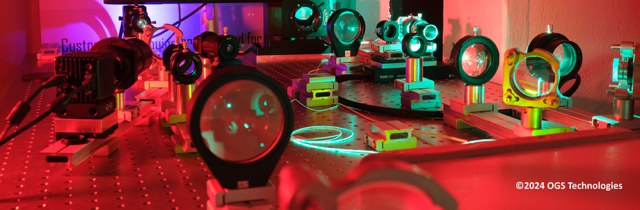
Figure 1 – banc Tx – (c) 2024 OGS Technologies
Thanks to these technologies, the measured performance improvements were significant. For example, without adaptive optics, the link is heavily disturbed by atmospheric turbulence, and few photons are successfully injected into the satellite’s receiving terminal. With the correction provided by Bertin Alpao’s system, this coupling efficiency rises to 30–40%, enabling a stable high‑bandwidth optical link.
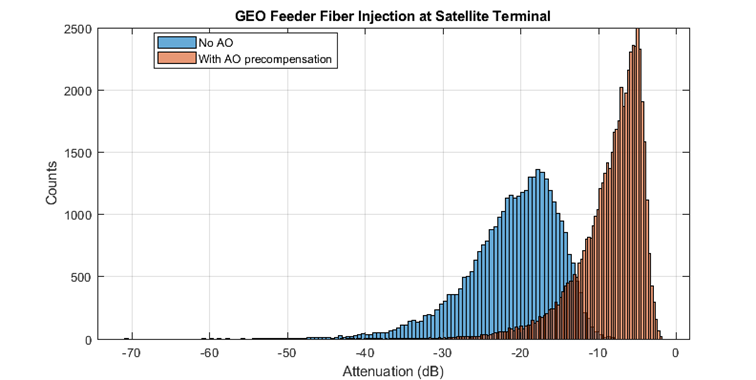
Figure 2 – Losses due to atmospheric turbulence
Major advances in orbit driven by the TELEO heritage
On the space segment, Bertin Winlight drew on its experience from TELEO, the geostationary demonstrator that achieved 10 Gbps in 2023.
Building on this expertise, several critical technologies were designed or enhanced:
- Evolution of FiTT (Fiber Injection Telescope Technology): increased maturity up to TRL 5, along with new patent filings,
- On-board HPMUX: a patented high‑power WDM multiplexer. With 8 channels of up to 10 W per channel and insertion loss below −0.5 dB, the HPMUX successfully demonstrated high-power laser robustness. This enables data rates of 8 × 200 Gbps or 1.6 Tbps for downlink signals.
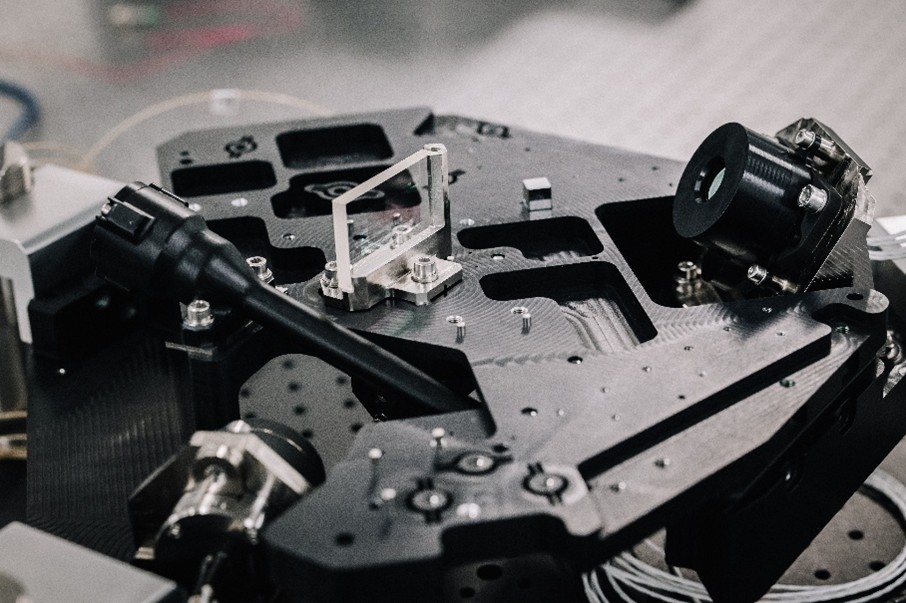
Figure 3 – Bertin Winlight FiTT – Fiber Injection Telescope Technology
Toward operational deployment as early as 2029
Following the achievements of CO-OP, development work is continuing under the SOLiS project (Service Optique de Liaisons spatiales Sécurisées). Coordinated by Thales Alenia Space and involving ONERA and several industrial partners, including Bertin Technologies, this program aims to deploy an operational optical link in GEO orbit by 2029.
Bertin Technologies continues to play a central role, reinforcing its position, and that of France, among Europe’s leaders in space optical communication technologies.