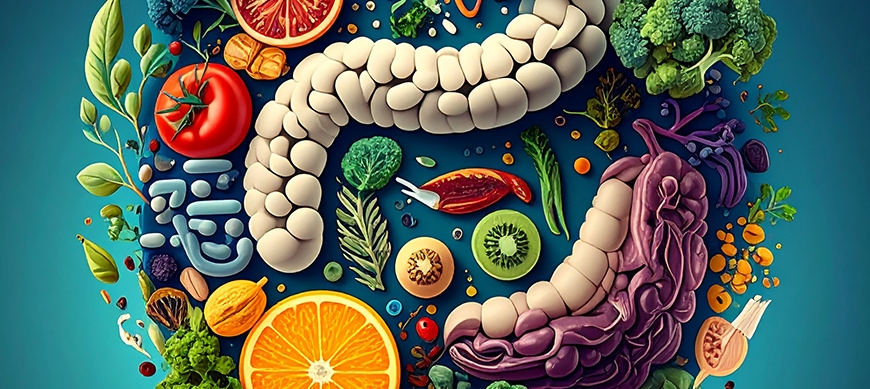
Summer body? Great.
A healthy colon? Even better!
What you eat doesn’t just shape your silhouette — your dietary habits strongly influence your overall health and well‑being.
Some cancers, such as colorectal cancer (CRC), are directly linked to what you eat.
While diet has long been known to shape the gut microbiota, it was not clearly established whether the combination of diet and gut microbiota could actually drive CRC development by altering the host metabolic profile.
A recent study by De Filippo et al. addressed this question using a rigorous experimental design and genetically modified rat models to compare four dietary regimens:
🔴 High CRC‑risk diet — rich in red and processed meat (MBD),
🟠 Normalized CRC‑risk diet — MBD supplemented with α‑tocopherol (MBDT),
🟢 Low CRC‑risk diet — Pesco‑vegetarian diet (PVD),
⚪ Standard control diet.
By combining the analysis of tumor biomarkers (including DHN‑MA and 8‑isoPGF2α, both measured using Bertin Bioreagent kits), along with gene sequencing and metabolomic approaches, the study revealed a clear outcome:
The pesco‑vegetarian diet significantly reduces CRC risk compared to a meat‑based diet.
Even more strikingly, this study is the first to demonstrate the central role of the gut microbiota in diet‑associated CRC susceptibility. The researchers showed that CRC risk could be transferred simply by transplanting the microbiota from meat‑fed rats into germ‑free rats, which subsequently developed preneoplastic lesions.
These findings clearly establish the gut microbiota as a key mediator of diet‑related cancer risk.
So, if you’re considering changing your diet to achieve your best possible summer body, think beyond calories and aesthetics. Maintaining a diverse diet, including vegetables, fish, and moderate amounts of meat, is essential to protect your colon — it will thank you!
🔬 From research insights to reliable tools
Bertin Bioreagent supports gut health and cancer research with a comprehensive range of ELISA kits and reagents, including solutions for oxidative stress and inflammation biomarkers.