Airborne Microplastics Detection
Microplastics are emerging as a new class of airborne pollutants. Discover how the Coriolis air samplers enable reliable detection and quantification of microplastics and microfibers in complex outdoor and indoor environments.
Microplastics — defined as plastic particles smaller than 5mm — have long been studied in marine and freshwater environments. However, the airborne dimension of microplastic pollution has gained increasing scientific attention over the past decade. Synthetic textile fibers shed by garments during handling, transport, and disposal represent a major and underestimated source of airborne microparticles. These microfibers, which are a type of microplastics with a “fiber shape” (thus with a length greater than the diameter) and other types of microplastics, can remain suspended in the air for extended periods before being deposited onto surfaces or washed into water bodies by rain events — making them a pervasive environmental and public health concern.
Quantifying microplastics in the air poses significant methodological challenges. Classical monitoring instruments such as PurpleAir sensors can detect particles “flying by” the device and give their size (PM2.5, PM10), but cannot discriminate between natural particles (dust, pollen) and synthetic microplastics. Reliable identification and quantification, therefore, requires active air sampling combined with microscopy analysis. The Coriolis air samplers, based on cyclonic dry or liquid impingement technology, offer a decisive advantage: they collect bioaerosols and particles, enabling downstream analysis by fluorescence microscopy, microspectroscopy, or other standard microplastics characterization methods.
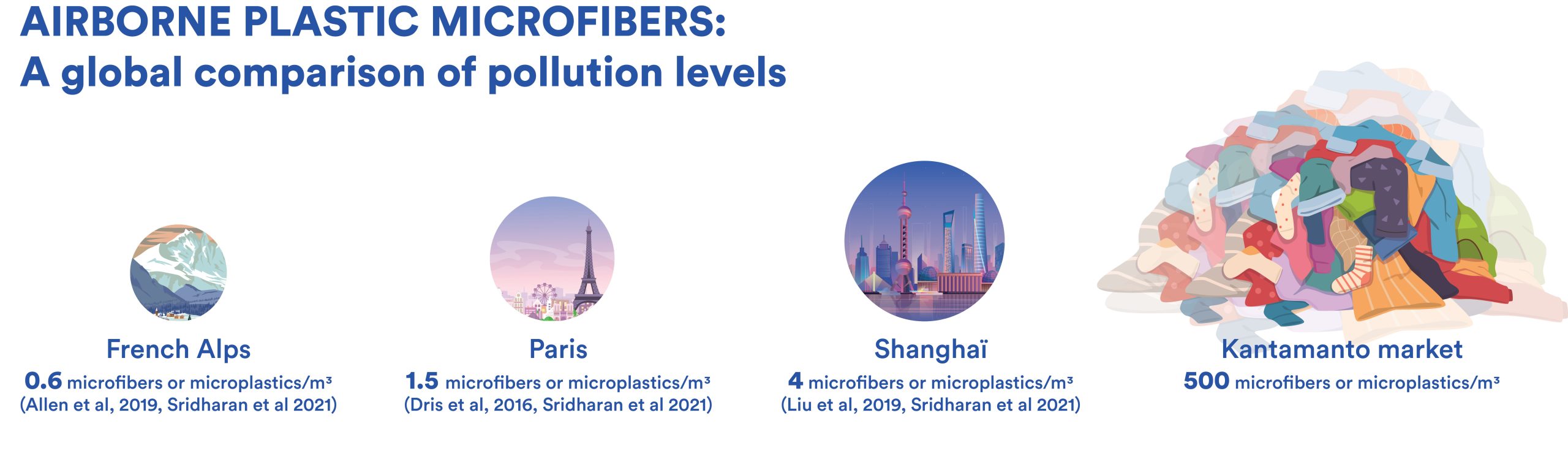
Data source: Deheyn et al., 2024. bioRxiv. doi: 10.1101/2024.05.13.593950
Best practices for airborne microplastics sampling with the Coriolis air samplers
1- SAMPLING STRATEGY:
Adapt your sampling setup to the environment under investigation
The positioning and height of the Coriolis sampler directly influence the representativeness of the sample. In outdoor settings such as textile markets, industrial sites, or agricultural areas, placing the device at heights between 5 and 10 meters above ground level allows for capturing microfibers transported by thermal convection currents — as demonstrated in Kantamanto, where microfiber counts at 10m were systematically higher than at 5m. In indoor environments (warehouses, sorting facilities, manufacturing plants), position the device downstream of the main airflow and at the breathing zone height of the workers.
2- AIRFLOW RATE AND SAMPLING DURATION:
Maximize the volume of air sampled
Sampling a minimum of 6,000 liters of air per collection is recommended as a baseline. This corresponds to a 2-hour run at 50 L/min with the Coriolis Compact — the protocol validated in the Kantamanto study.
- The Coriolis Compact runs up to 8 hours on battery at 50 L/min, making it well-suited for multi-session field campaigns
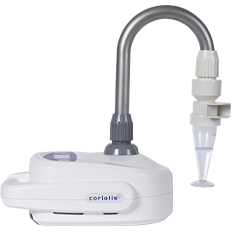
- The Coriolis+, with its liquid collection mode, collects particles directly into the sampling liquid — eliminating the resuspension step and potentially reducing contamination risk
3- COLLECTION STEP:
Choose a contamination-safe, microplastic-free medium
The choice of collection medium is critical to avoid false positives.
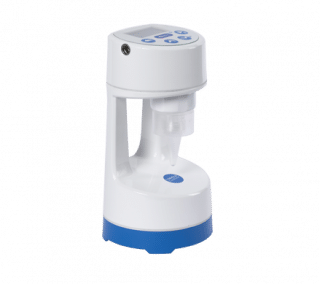
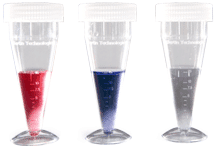
- The Coriolis Compact does not require any collection liquid. Its cone can be purchased sterile to guarantee a sample free of unwanted particle contamination.
- The Coriolis+ requires filtered, microplastic-free water or an appropriate buffer solution as the sampling medium. Avoid liquids stored in standard plastic containers and verify all reagents for microplastic content prior to use. Starting volumes between 5 and 15 mL are typically suitable for standard sampling sessions.
4- CONTAMINATION CONTROLS:
Implement strict laboratory protocols
Microplastic contamination is a well-documented challenge in this field. Process samples in enclosed spaces with limited air circulation, away from any textile source. Systematically run replicates: in the Kantamanto study, 4 replicates were always collected per sampling session — 3 were analyzed in the same laboratory, while the fourth was sent to an independent laboratory to ensure quality control. Keep only fluorescent particles showing synthetic characteristics under epifluorescence microscopy (ex. 360–380 nm, em. >415 nm).
5- SAMPLE ANALYSIS:
Fluorescence microscopy as the reference technique
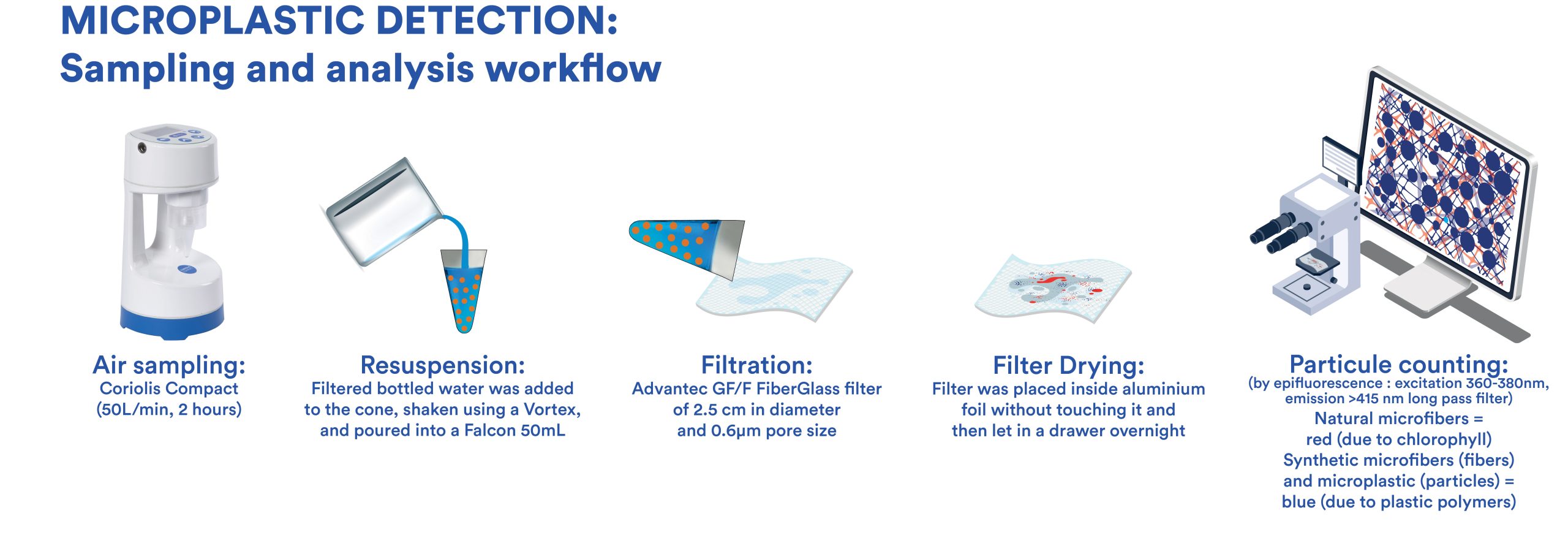
The Coriolis Compact collects particles dry. After sampling, add microplastic-free filtered water into the cone, shake using a Vortex, and pour into a Falcon 50 mL tube. Filter the resuspended sample on an Advantec GF/F FiberGlass filter (2.5 cm diameter, 0.6 μm pore size). Place the filter on aluminium foil without touching the surface and let it dry overnight in a closed drawer.
Dried filters are then imaged by epifluorescence microscopy (excitation 360–380 nm, emission >415 nm long pass filter) to distinguish:
- Natural microfibers — red fluorescence (chlorophyll autofluorescence)
- Synthetic microfibers and microplastic particles — blue fluorescence (due to plastic polymers)
Results are expressed in counts/m³ for comparability across sites and studies.
Data source: Deheyn et al., 2024. bioRxiv. doi: 10.1101/2024.05.13.593950
6- MULTI-SITE AND TEMPORAL MONITORING:
Capture the variability of airborne microplastics
Microplastic concentrations in the air show strong spatial and temporal variability. Rainfall events, in particular, can significantly reduce airborne counts by washing particles down — but the first flush of rain following a dry period of 3 to 4 days may carry the highest microfiber loads. Sequential sampling across dry and wet weather conditions, combined with measurements at multiple distances from the suspected source, is essential to accurately characterize a pollution gradient and assess source attribution.
Related products