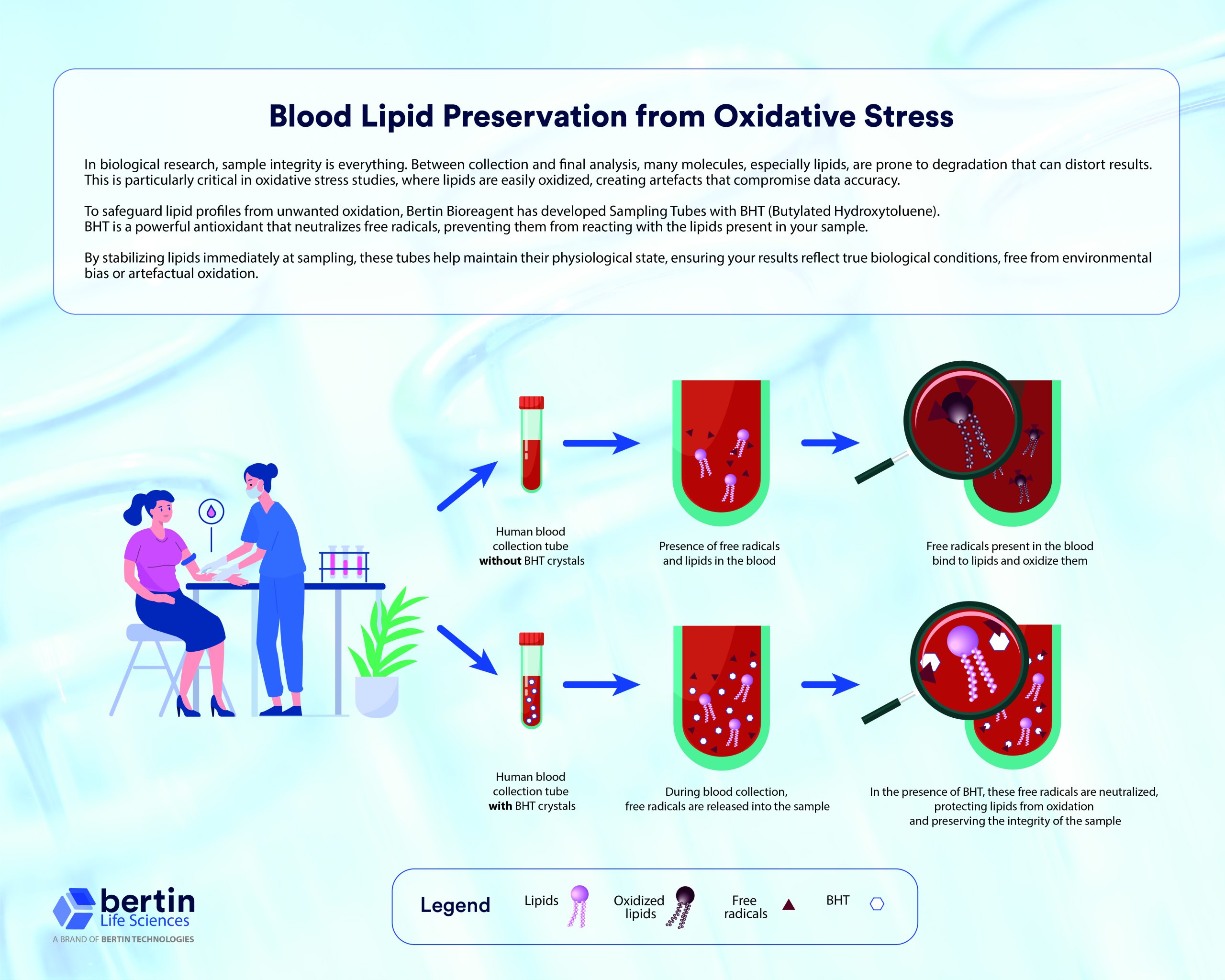
Between collection and analysis, biological samples undergo multiple stress factors that can alter their composition. Lipids are especially vulnerable: in standard tubes, free radicals can react with lipid species and trigger peroxidation, generating artifacts that compromise quantitative accuracy.
The infographic below illustrates this phenomenon. In a regular tube, free radicals present in the blood interact with lipids as soon as the sample is drawn, accelerating oxidative degradation. This early alteration modifies the native lipid profile and increases variability across replicates.
Bertin Bioreagent BHT Tubes are designed to counteract this instability. Each tube is coated with BHT (butylated hydroxytoluene), a well‑known antioxidant capable of neutralizing free radicals before they reach sensitive lipid molecules. By limiting peroxidation at the moment of sampling, these tubes help maintain the physiological state of lipids throughout handling and storage.
Beyond antioxidant protection, the tubes offer a 1 mL capacity and include a silicone joint compatible with storage down to −80 °C. This ensures sample integrity from collection to long‑term conservation, even during freezing and transport.
By preventing lipid oxidation from the moment of sampling, BHT crystal tubes help deliver more reliable lipid quantification and reduce the risk of oxidative artifacts in studies related to metabolism, inflammation, neuroscience, or any field where lipid stability is critical.
A reference study by Burton & Ingold (1981) established the antioxidant efficiency of phenolic compounds such as BHT in mitigating auto‑oxidation of biological molecules, reinforcing the scientific basis of our approach.
A detailed visual overview now demonstrates the full mechanism, from blood collection to radical neutralization, highlighting the difference between standard tubes and BHT‑coated solutions.