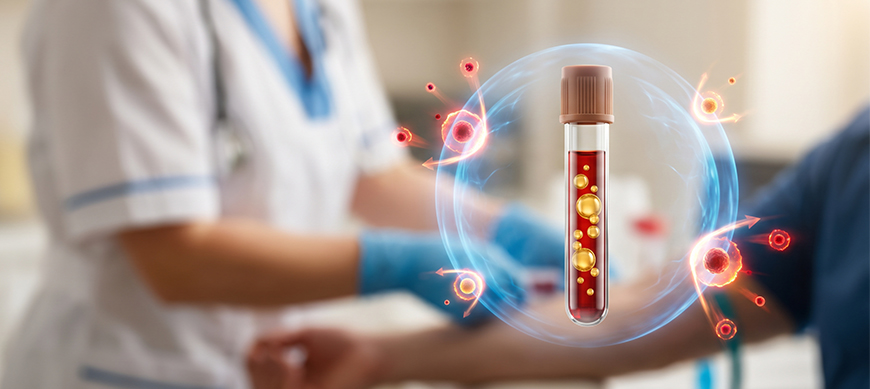
In lipidomics studies, data quality depends first and foremost on sample integrity. Yet lipids are among the biomolecules most susceptible to oxidation. From the moment of collection, natural reactions can alter their composition, creating discrepancies between the sample’s true biological state and the data ultimately obtained during analysis.
This early degradation is mainly driven by free radicals present in the blood. Even before sample preparation or storage, these highly reactive molecules can affect certain lipid species and generate artifacts that may influence quantification and data interpretation. For laboratories working in metabolism, inflammation, cardiovascular research, or neuroscience, controlling this phenomenon is a critical challenge.
Bertin Bioreagent BHT Tubes were developed to address this issue at the earliest stage: sample collection. Coated with crystals of butylated hydroxytoluene (BHT), a well-established antioxidant, these tubes neutralize free radicals as soon as the sample is collected and help preserve lipid integrity throughout handling and storage, including long-term storage at -80°C. By limiting oxidation at its source, they contribute to more reliable analyses, improved study reproducibility, and data that more accurately reflects the sample’s true biological conditions.
A detailed overview is available to illustrate the entire mechanism, from blood collection through free radical neutralization, while highlighting the advantages of BHT-coated tubes compared with standard collection tubes for improving the reliability of lipidomics analyses.